For years, I treated anxiety like an enemy I had to defeat. I’d fight it, push it away, distract myself, numb out. I’d tell myself to “just calm down” or “think positive.” None of it worked. The more I fought, the stronger it got. I was exhausted from a war I couldn’t win.
What changed wasn’t finding some magical cure. It was understanding that anxiety isn’t my enemy—it’s my nervous system doing exactly what it evolved to do: try to keep me safe. The problem isn’t anxiety itself. It’s that the alarm system got stuck. These three books helped me unstick it—each from a completely different angle.
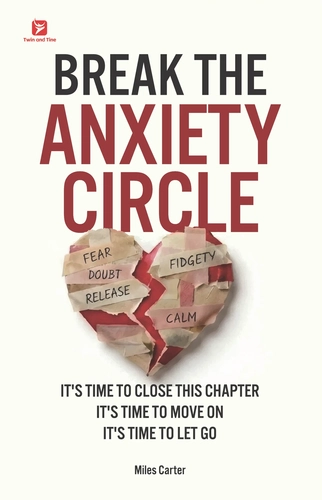
Book One: Break the Anxiety Circle by Miles Carter
This book became my anchor because it met me where I actually was—not where I wished I was. It doesn’t assume you’re calm enough to do complicated exercises. It assumes you’re a mess, your heart is racing, and your brain is scrambled. And it gives you tools that work anyway.
The core insight: anxiety is a feedback loop. Thought triggers fear. Fear triggers physical response. Physical response confirms the thought. Round and round. The more you push, the tighter it gets. But once you see the pattern, you can interrupt it. The chapter “Action Is the Antidote to Anxiety” gave me small, physical steps to break the loop—things I could actually do when my mind was spinning. Not vague advice. Real moves.
What I loved most is that this book doesn’t shame you. It doesn’t say “you’re overreacting” or “just relax.” It says: your brain is doing what brains do. Let’s work with it, not against it. That alone made me feel less broken.
Book Two: DARE: The New Way to End Anxiety and Stop Panic Attacks by Barry McDonagh
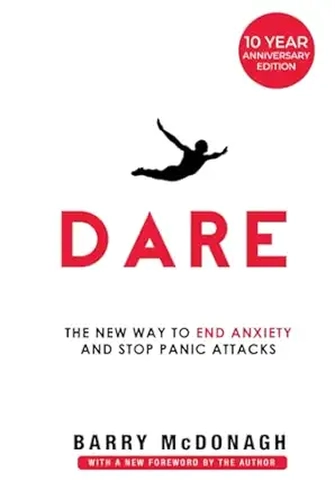
This book is for when you’re ready to stop running. McDonagh’s framework is almost counterintuitive: instead of trying to calm down, you actually invite the anxiety in. You stop fighting. You stop resisting. And weirdly, that’s when it starts to lose its grip.
The DARE method stands for Diffuse, Allow, Run Toward, Engage. You diffuse the scary thought by telling yourself “so what?” You allow the physical sensations to be there without fighting them. You run toward the fear—”bring it on, I can handle this.” And then you engage with something else to redirect your focus. I was skeptical. But during a panic attack, I tried it. And something shifted. The fear lost its edge because I stopped giving it power.
This book gave me permission to stop being afraid of my own fear. That was huge.
Book Three: Why Has Nobody Told Me This Before? by Dr. Julie Smith
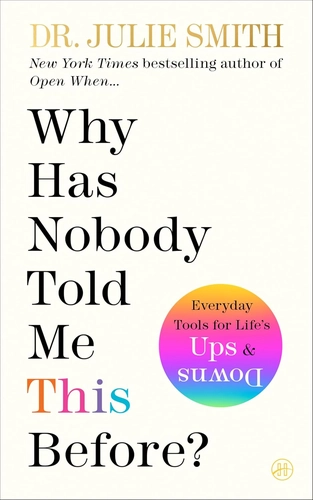
This one is different from the others. Smith is a clinical psychologist who writes in short, digestible chapters—each one tackling a specific mental health struggle. It’s not a book you have to read cover to cover. You can jump straight to the chapter on anxiety and get what you need.
Her approach is practical and grounded in real therapy techniques. She explains the biology of anxiety, why your body reacts the way it does, and what you can actually do about it. But she also addresses the shame—the voice that says “you should be able to handle this” or “other people have it worse.” She gently reminds you that anxiety isn’t a competition and your struggle is valid.
What I loved is how accessible it is. This is the book I recommend to friends who aren’t “readers” or who feel overwhelmed by thicker books. It feels like having a therapist in your pocket.
What These Three Books Gave Me
The first book gave me tools I could use in the moment—when I couldn’t breathe and my mind was everywhere. The second gave me a radical new mindset: stop fighting and start accepting. The third gave me understanding—the biological and psychological why behind what I was feeling.
Together, they didn’t cure my anxiety. But they changed how I live with it. I don’t spend as much energy fighting myself anymore. I don’t feel as broken. I have a plan when the spiral starts. And most days, that’s enough to keep me moving forward.
If you’re in that place right now—exhausted from fighting your own mind—I hope you give yourself the gift of learning this stuff. You don’t have to figure it out alone.