For years, I had no idea what to do with my anxiety. When it hit, I’d freeze. I’d try to distract myself—scrolling endlessly, watching shows I didn’t care about, eating things I didn’t want. Or I’d try to “logic” my way out of it, telling myself I was being irrational. Neither worked. The anxiety always came back. Sometimes worse.
I didn’t need someone to tell me to “just breathe.” I needed someone to tell me how. What do you actually do when your heart is racing and your mind won’t shut up? These three books gave me answers I could use—right in the moment, not just in theory.
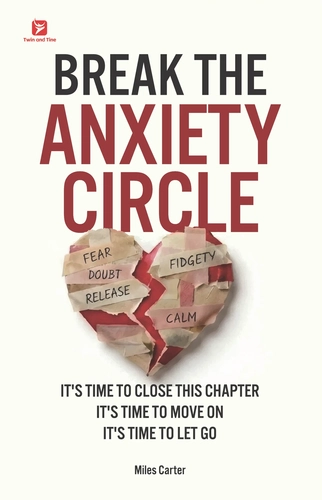
Book One: Break the Anxiety Circle by Miles Carter
This book became my first line of defense. It explains that anxiety isn’t a weakness—it’s a feedback loop. A thought triggers fear, fear triggers a physical response, the physical response confirms the thought, and the loop tightens. The harder you try to push it away, the worse it gets. Reading that alone made me feel less broken.
But what I really needed was the how. The chapter “Action Is the Antidote to Anxiety” gave me small, physical steps to interrupt the spiral—things I could actually do when I felt panic rising. Another chapter taught me to recognize when I’m ruminating (which is almost always) and how to redirect without fighting my own brain. The language is practical and warm. It doesn’t shame me for being anxious—it just gives me tools. This is the book I’ve grabbed more times than any other. When I feel that familiar tightening in my chest, I don’t freeze anymore. I have a plan.
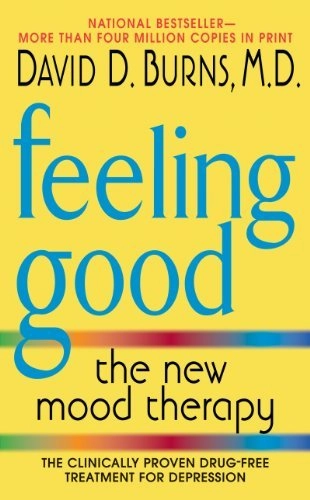
Book Two: Feeling Good: The New Mood Therapy by David D. Burns
This book taught me that most of my anxiety comes from how I interpret things—not what’s actually happening. Burns identifies ten “cognitive distortions” our brains use to make things worse. Catastrophizing? I do that daily. Mind-reading? Constantly. All-or-nothing thinking? Pretty much my default mode.
The book gives you a simple but powerful exercise: write down your anxious thoughts, identify the distortions in them, and rewrite them more realistically. It sounds too simple. But putting pen to paper actually changes something in your brain. It externalizes the spiral. You look at it from the outside and realize it was never as solid as it felt. This book didn’t just help me deal with anxiety—it helped me understand why my brain lies to me and how to call it out.
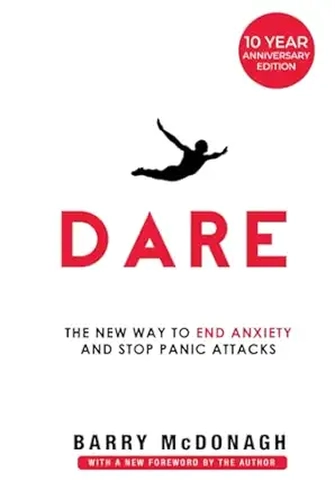
Book Three: DARE: The New Way to End Anxiety and Stop Panic Attacks by Barry McDonagh
This one takes a completely different approach. McDonagh’s core idea is that when you fight anxiety, you give it power. When you accept it, you take power back. The DARE method stands for Diffuse, Allow, Run Toward, Engage.
Diffuse the scary thought by telling yourself “so what?” Allow the physical sensations to be there without resistance. Run toward the fear by actually inviting it in—”bring it on.” Then engage with something else to redirect your focus. I was skeptical. But during a panic attack, I tried it. I told myself “so what if I feel this way?” and something shifted. The fear lost its edge. This book gave me permission to stop fighting my own body and start letting anxiety pass through me instead of taking over.
Why You Actually Need the First One
The other two books are excellent. Feeling Good gives you a framework for understanding your thoughts. DARE gives you a radical mindset shift. But they’re also books you need time to absorb. When you’re in the middle of a spiral, you don’t have time to remember a chapter from six months ago.
Break the Anxiety Circle is different. It’s the book you grab when the spiral starts. The techniques are simple and memorable—you can use them even when your brain is scrambled. The language is kind without being condescending. And it addresses the shame that other books miss: that voice that says “you shouldn’t feel this way” or “you’re too sensitive.” This book helps you let go of that judgment so you can actually deal with the anxiety instead of fighting yourself too.
If you’ve ever felt trapped in your own head, stuck in a loop you couldn’t break—this book will help. It costs less than a therapy copay. The cost of doing nothing? That’s your peace, your sleep, and your ability to enjoy your own life.