It took me five years to beat overthinking. Five years of lying awake at 2 a.m., replaying conversations I’d already had. Five years of drafting text messages I never sent, because I couldn’t decide on the perfect wording. Do you know that feeling? When your brain just won’t shut off, and every small decision feels like a life-or-death choice?
I remember the exact moment I hit my limit. I spent three hours trying to pick a birthday card for my brother. Three hours. I stood in that store aisle, picking up and putting down the same cards, convinced there was a “right” choice I was somehow missing. My hands were sweating. My heart was racing. Over a card. That’s when I realized I needed a real cure for overthinking, not just another breathing exercise I’d abandon by Friday.
The truth? There’s no magic switch. But there is a system. It took me half a decade to figure it out. And I’ll show you the daily work that actually makes it stick.
Quick Cure for Overthinking Today
If the spiral is starting, try these:
- Name it in the moment: say “this is overthinking” out loud.
- Set a 10-minute timer for worry, then stop when it rings.
- Write the thought down and physically close the notebook.
- Ask one question: “Can I act on this right now?”
- If the answer is no, redirect your hands to a physical task.

Why Do I Overthink Everything? Understanding the Loop
Here’s what I learned after years of studying my own brain. Overthinking isn’t a thinking problem. It’s a feeling problem wearing a thinking costume.
You’re not actually trying to solve anything. You’re trying to feel safe. Your brain is convinced that if you just think about it enough, you’ll gain control over an uncertain world. But you won’t. You’re just feeding the loop.
I used to think my overthinking was a sign of intelligence. “I’m just thorough,” I’d tell myself. “I’m considering all angles.” No, I wasn’t. I was spinning in circles while my life passed me by. How many dinners did I miss because I was “just finishing this thought”? How many conversations did I tune out because my brain was busy rehearsing a future argument that would never happen?
The loop works like this. You have a thought. You engage with it. You try to resolve it. But the thought doesn’t resolve, because it was never meant to. It was just a feeling of anxiety wearing a question mark. So you try harder. And the harder you try, the more anxious you get. And the more anxious you get, the more you think. Sound familiar?
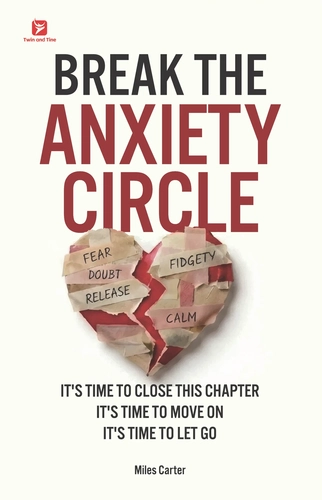
When I finally understood that overthinking wasn’t a flaw in my logic but a signal from my nervous system, I stopped trying to “think my way out” and started looking for something that actually addressed the root. That’s when I found Break the Anxiety Circle by Miles Carter. It doesn’t tell you to just “stop thinking”—it gives you real, repeatable exercises for the exact moments when your brain is stuck in a loop. One chapter taught me how to interrupt the spiral before it even starts; another gave me a simple question to ask myself when I’m obsessing over a decision. It’s the kind of book you keep on your nightstand, not because you read it once, but because you reach for it again and again when the old patterns creep back.
A Practical Approach That Changed Everything
I’m not going to pretend this is easy. It’s not. But it’s simpler than you think. Here are the exact steps I’ve used daily for the past two years.
Recognize and acknowledge overthinking. This sounds obvious, but it’s not. Most of us don’t notice we’re doing it. We just think we’re “thinking.” So the first step is catching yourself in the act. When you notice your mind circling the same thought for more than five minutes, say it out loud. “I am overthinking right now.” Saying it breaks the trance. Try it. It feels silly, but it works.
Challenge your thoughts. Ask yourself a brutal question: “Is this thought helping me or hurting me?” Not “is it true?” Not “is it possible?” Just: is this line of thinking moving me forward, or keeping me stuck? Most of the time, the answer is clear. It’s keeping you stuck. So why are you still doing it? You’re not. You’re going to stop.
Practice mindfulness, but make it tiny. You don’t need to meditate for an hour. You need to notice the present moment for thirty seconds. Feel your feet on the floor. Look at the color of the wall. Listen to the hum of your computer. That’s it. That’s mindfulness. You’re pulling your brain out of the past or future and parking it in the now. The now is where you actually live. The now is where you’re actually safe.
Engage in healthy distractions. This is not avoidance. This is replacement. Your brain can’t think two thoughts at once. So when the spiral starts, give it something else to do. Go for a run. Bake something. Call a friend. I started lifting weights. The physical exhaustion quieted my mind in a way that no amount of “thinking about not thinking” ever could. What could that be for you?
Set boundaries with your thoughts. This one changed my life. I now have a daily “worry window.” From 5 p.m. to 5:10 p.m., I’m allowed to worry. I write down every anxious thought. When the timer rings, I close the notebook and I go back to my life. The thoughts still come, but I tell them, “See you at 5 p.m.” And somehow, the act of postponing them drains their power. They’re not urgent anymore. They can wait.
The 90-Second Rule: My Favorite Tool for Beating Overthinking
Here’s the thing about overthinking. It starts with a trigger. A text message. A comment. A memory. And then it spirals. But here’s what I discovered: the initial emotional hit only lasts about 90 seconds. After that, you’re not feeling the feeling anymore. You’re rehearsing it. You’re keeping it alive on purpose.
So I made a rule. When I feel the spiral starting, I don’t fight it. I let it wash over me for 90 seconds. I sit with the discomfort. I count to ninety. Then I ask myself, “Okay, is this still real, or am I just doing the thing again?” And almost always, the intensity has passed. The thought is still there, but it’s quieter. Like a radio turned down low.
Does this sound too simple? Maybe. But try it the next time you’re spiraling. Set a timer on your phone. Just 90 seconds. Let yourself feel everything. Then stand up and do something physical. I promise you, the storm will have passed.

Why It Took Me Five Years to Find This Cure for Overthinking
I know what you’re thinking. “Great, more advice. I’ve tried all this before.” And you’re right to be skeptical. I was too. I read every article. I tried every app. I bought all the books. And nothing stuck.
Here’s what I didn’t understand. You can’t beat overthinking in one sitting. It’s not a battle you win. It’s a habit you replace. And habits take time. Daily, boring, repetitive time. It took me months before I noticed a difference. Not weeks. Months. And even now, I still catch myself spiraling. The difference is, I catch it now. And I can stop it.
The advice I’m giving you isn’t new. You’ve probably heard all of it before. But the difference is consistency. I didn’t do these things once. I did them every single day for two years. And slowly, the neural pathways shifted. The default became presence, not panic. The default became action, not analysis.
If you truly want to beat overthinking, it doesn’t take 30 seconds. You know that. I can tell you how to beat it in 30 seconds, but it takes daily consistency for you to truly beat overthinking. It may sound hard, difficult, and tiring right now. But once you overcome it, the feeling is incredible. It’s like being freed from chains that once stopped you from reaching your full potential and living your best life.
On the days when the “hard, difficult, and tiring” part feels like too much—when you’re exhausted from fighting your own mind and just want someone to hand you a map—Break the Anxiety Circle by Miles Carter became my anchor. It’s filled with short, digestible passages that don’t demand hours of your time, but somehow manage to shift your perspective in just a few minutes. The quotes alone—simple, healing, almost like small prayers—helped me reframe my relationship with my thoughts. It doesn’t promise a quick fix (and you already know better than to fall for that), but it offers the kind of steady, practical companionship that makes the daily grind feel survivable. I’d flip to a random page on hard mornings, and more often than not, the words I needed were right there.
FAQ
Q: What is the best cure for overthinking?
A: The best approach combines awareness, action, and consistency. You need to catch yourself in the moment, redirect your attention, and do it daily for months. There’s no single trick. The “cure” is building new habits that gradually replace the old pattern.
Q: How do I stop overthinking at night when I can’t sleep?
A: This is the hardest one. What worked for me: I keep a notebook by my bed. When thoughts come, I write them down and tell myself, “It’s saved. I can deal with it tomorrow.” Then I use a body scan. I focus on my toes, then my feet, then my ankles, moving up slowly. It’s boring, but that’s the point. Boring disrupts the spiral.
Q: Is overthinking a mental illness?
A: No, but it can be a symptom of anxiety for some people. I’m not a doctor, so I can’t give medical advice. What I can say is that everyone overthinks sometimes. If it’s interfering with your daily life, some parents and friends find that talking to a professional helps. That’s a personal decision. There’s no shame in it.
Q: How long does it take to stop overthinking?
A: For me, it took about six months to notice a real shift. The first month felt like nothing was working. The second month, I had more “good days.” By the sixth month, the good days outnumbered the bad. By the end of year two, the overthinking was rare. Not gone, but rare. And manageable. It’s a process, not an event.
Q: What if I try all these methods and still overthink?
A: That’s okay. Some days are harder than others. Overthinking is a stubborn habit. The goal isn’t to never overthink again—it’s to catch it sooner and recover faster. Keep practicing. Each time you redirect, you’re building a new pathway. If the pattern feels deeply ingrained, talking to a therapist can help you understand what’s underneath it.
One Last Thing
I still have days when my brain won’t stop. Last week, I spent twenty minutes worrying about whether I’d offended a cashier by not making eye contact. Old habits die hard. But here’s the difference. I noticed it. I said it out loud. I laughed at myself. And I let it go.
That’s the real cure. Not perfection. Not silence. Just noticing, and choosing something else. You can do this. I know you can. It took me five years, but I finally did.
References
- Harris, R. (2011). The Confidence Gap: A Guide to Overcoming Fear and Self-Doubt. Shambhala Publications.
- Tolle, E. (1997). The Power of Now: A Guide to Spiritual Enlightenment. New World Library.
- American Psychological Association. (2020). Understanding Anxiety and Overthinking. Retrieved from apa.org.