I spent ten years trying to think my way out of the past. I read every book. I analyzed every memory. I could explain my trauma to anyone, in perfect detail, without feeling a single thing. I thought that was healing. I was wrong.
The turning point came on a random Tuesday. I was sitting at my kitchen table, and a wave of grief hit me out of nowhere. My first instinct was to push it down. Then I remembered something I had just read. What if I just felt it? What if the way to let go of trauma from the past was not in my head at all, but in my chest, my stomach, my throat?
So I sat there. I breathed into the tightness. I let my shoulders shake. And for the first time in my adult life, the memory passed through me instead of around me.
Quick Start Today
If you’re ready to begin, try these:
- Place one hand on your chest and one on your belly.
- Breathe into your belly for four counts, out for six.
- When an emotion rises, name it out loud.
- Let your body move, shake, or tremble if it wants to.
- Do not analyze. Just feel. Then breathe again.

Why Does My Body Keep the Past Stuck?
Here is what I learned the hard way. Trauma does not live in your thoughts. It lives in your tissues. When something overwhelming happens, your body goes into survival mode. You freeze. You brace. You hold your breath. That energy has to go somewhere.
For me, it went into my shoulders. Then my jaw. Then a constant knot in my stomach that I did not even notice anymore. I was so used to the tension that I thought it was just who I was. I recognize that feeling now—that low-level hum of alertness that never turns off.
Someone once wrote about how wild animals survive life-threatening situations. They do not stay traumatized. They shake. They tremble. They breathe deeply. They complete the cycle physically, and then they move on. Humans freeze. We hold. We tell ourselves to be strong. We store the event in our bodies and call it moving on. I noticed how my posture changes when I think about a hard memory. My chest tightens. That is the past, still present.
How Do I Let Go of Trauma From the Past When Thinking Makes It Worse?
Stop trying to figure it out. I know that sounds backwards. I spent so long believing that understanding my past would set me free. It did not. It just gave me better vocabulary for my pain. What actually helped was getting out of my head and into my body. This is the part I wish someone had told me years ago.
The mind must be calm for the body to release. You cannot process anything when you are wired tight. So the first step is regulation. Slow your breathing. Soften your jaw. Drop your shoulders. Then, and only then, can you touch the old stuff without getting flooded.
Here is a simple practice that changed everything for me. I call it the 3-Minute Body Check. Close your eyes. Scan from your feet to your head. Where do you feel tight? Where do you feel numb? Where do you feel nothing at all? Pick one spot. Breathe into it. Imagine your breath softening that spot. Stay there for three minutes. That is the whole practice. It sounds too simple. It is not. This is how you teach your nervous system that the past is over and you are safe now.
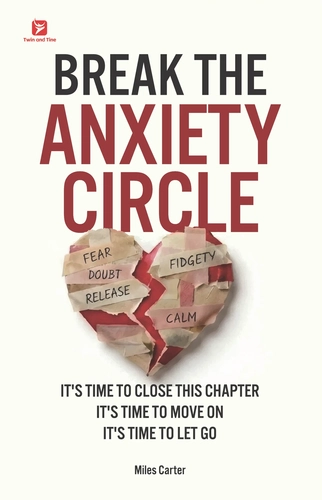
And when your mind keeps circling back to the same anxious questions—”what if I never heal?” “what if I’m doing it wrong?”—that’s exactly where Break the Anxiety Circle by Miles Carter steps in. It doesn’t give you more theories to chew on. It gives you concrete, daily exercises for the moments when your thoughts spin out and your body tightens up. I kept a copy on my phone for those 3 a.m. wake-ups, and just reading one short passage would pull me out of the spiral and back into my breath. It covers everything from indecision to self-blame, and the quotes alone feel like someone holding your hand through the hard parts.
The 60-Second Body Scan Ritual
This is the tool I use every single day. It is the reason I can finally say I know how to let go of trauma from the past without spiraling.
When an old trigger fires, I stop. I do not run to my thoughts. I run to my body. I ask myself three questions. Where is this in my body? What does it feel like? What does it need?
The answer is almost never a solution. It is usually a sensation. Heaviness in my chest. Heat in my face. A knot in my throat. I place my hand there. I breathe. I say to myself, “I feel this. It is old. It is passing.” And then I wait. The feeling changes. It loosens. It dissolves. It passes.
This is the part that surprised me. When I stopped blocking the pain, I started feeling joy too. For years, I was emotionally numb. I thought I was protecting myself. I was actually blocking everything. The warmth of connection. The excitement of something new. The simple pleasure of a good laugh. All of it was locked behind the same wall I built for protection. I felt that sense of being alive but not really living.
The body does not store only pain. It stores everything. When you learn how to let go of trauma from the past, you also learn how to let in the good stuff. That is the gift nobody talks about.
What If I Feel Too Much When I Try?
This is the scariest part, is it not? You start breathing into your body, and suddenly a wave of old grief rises up. It feels enormous. You worry you will drown. You worry you will fall apart and never come back.
Here is what I learned. You will not drown. The wave always passes. It has a beginning, a middle, and an end. If you let it move through you, it loses its power. If you push it down, it stays. It grows. It waits for the next trigger.
Start small. Do not try to process your whole life in one sitting. Touch the edge of the feeling. Breathe into it for thirty seconds. Then stop. Come back to the room. Look at the wall. Feel your feet on the floor. You are building a skill, and skills take time. Some days, I only last one minute. That is fine. One minute is more than zero.
There is one more thing that helped me. Moving my body. Trauma is energy, and energy needs to move. I started walking. Then I added shaking, like a dog coming out of water. I looked ridiculous. I did not care. I would stand in my living room and let my arms and legs tremble until the charge settled. It worked. Some nights, I would do this for ten minutes and feel more settled than after an hour of talking about my problems.
If the fear of “too much” keeps you stuck—if you’re worried that letting yourself feel will break you open and you won’t be able to put yourself back together—Break the Anxiety Circle by Miles Carter is the book I wish I’d had in those early, terrifying months. It doesn’t pressure you to dive into the deep end. Instead, it offers tiny, manageable steps that respect your nervous system’s pace. One chapter taught me a simple grounding technique that I still use when old grief surges; another gave me permission to stop chasing “closure” and just be present with what is. It’s practical, gentle, and full of the kind of hard-won wisdom that only comes from someone who’s been in the pit themselves.
How Long Does It Take to Release Stored Trauma?
This is the question I get asked most. The honest answer is that it takes as long as it takes. I have been at this for a decade. I still have days when old stuff surfaces. The difference is that now I know what to do with it. I do not panic. I do not judge myself. I breathe. I feel. I let it pass.
The small shifts build up. Less anxiety. More presence. A different way of relating to myself. One day, I realized I had gone a whole week without bracing for something bad to happen. That had never happened before. That is when I knew the work was working.
If you can, find a practitioner who can guide you. A professional can hold space for the big feelings in a way that feels safer. If you cannot afford that right now, there are resources that explain all of this in a way that just clicks.
FAQ
Q: Can you really let go of trauma from the past without talking about it?
A: Many people find that talking alone is not enough. The body needs to be involved. Breathing, movement, and feeling sensations can release what words cannot reach.
Q: Why do I feel worse before I feel better when I try to release trauma?
A: That is normal. When you stop suppressing, everything you pushed down starts to surface. It is uncomfortable, but it is a sign that the release is working.
Q: How do I let go of trauma from the past if I do not remember what happened?
A: You do not need the memory. The body remembers even when the mind does not. Focus on the sensations in your body, and let your breath move through them.
Q: Is it safe to do body-based release work on my own?
A: Start slow and stay grounded. If you feel overwhelmed, open your eyes, look around the room, and remind yourself you are in the present. If you have a history of severe trauma, working with a professional is a wise choice.
Q: What if I try body-based methods and nothing seems to shift?
A: That can happen. Sometimes the body needs more time or a different approach. Be patient with yourself. It might also help to try a different practice, like gentle movement or breathwork. The body knows how to heal—it just needs the right conditions and enough time.
One Last Thing
I still have a long way to go. I spent a lifetime learning to disconnect. I will not undo that in a year. But I finally understand the path. It runs through my body, not around it. When I feel the old familiar tightness, I do not fight it anymore. I greet it. I breathe into it. I let it know it is safe to leave. And it does. Every time, it leaves a little more.
You are not broken. Your body just needs to complete the process it never got to finish. It can. You can. Start with one breath. Then another. That is how the letting go begins.
References
- Levine, P. A. (1997). Waking the Tiger: Healing Trauma — The Innate Capacity to Transform Overwhelming Experiences. North Atlantic Books.
- Van der Kolk, B. (2014). The Body Keeps the Score: Brain, Mind, and Body in the Healing of Trauma. Viking.
- Rothschild, B. (2000). The Body Remembers: The Psychophysiology of Trauma and Trauma Treatment. W. W. Norton & Company.