So how do we actually move past this? How do we put ourselves first without the guilt spiral?
Start small. That’s the key.
The first time I said no to a friend, I practiced in the mirror. Literally. I said the words out loud until they felt less foreign. “I can’t do that this weekend. I need some time to myself.”
When I finally said it to a real person, my voice shook. I apologized three times. I offered alternatives. But you know what? She said “Okay, no problem!” and moved on. All that fear, all that anticipation, and it was over in five seconds.
Most people won’t react the way you fear. And the ones who do? They’re showing you who they are.
Try the “Grey Rock” approach for difficult conversations. Be boring. Be brief. Don’t over-explain. Just say “That doesn’t work for me” and stop talking. You don’t owe anyone a detailed justification for your boundaries.

A Simple Method That Changed Everything
I want to share a specific tool that helped me. I call it the Three Pause Method. It’s simple, but it works.
Pause One: Before you respond.
When someone asks for something, pause. Take a breath. Say “Let me think about that.” This breaks the autopilot pattern of saying yes.
Pause Two: After you respond.
If you say yes, pause afterward. Check in with your body. Does your chest feel tight? Does your stomach hurt? Those sensations are information.
Pause Three: After the interaction.
Later, reflect. How did it feel to say yes? How did it feel to say no? What are you telling yourself about what it means?
This method works because it interrupts the guilt loop. It creates space between the request and your response. In that space, you can choose. And choice is where freedom lives.
A Simple Table to Understand Your Patterns
| Situation | Old Pattern | New Response |
|---|---|---|
| Friend asks for a favor | Instant yes, resentment later | “Let me check my schedule and get back to you” |
| Someone seems disappointed | Apologize, fix it, blame yourself | “I can see you’re disappointed. I’m still not able to help.” |
| You need time for yourself | Cancel plans, feel guilty | Block time in your calendar like any other appointment |
| Someone is angry at your boundary | Cave in, explain, justify | Stay calm, repeat your boundary once, then stop talking |
What If the Guilt Doesn’t Go Away?
Sometimes the guilt is stubborn. It lingers even after we’ve said no. Even after we’ve practiced boundaries. Even after we’ve done everything “right.”
If that’s you, I want you to know something. This is normal. You’re unlearning years of conditioning. That takes time.
I still feel guilt sometimes. Last week, I told my sister I couldn’t watch her kids. I had a work deadline and I was exhausted. The guilt showed up right on schedule. But here’s the difference: I didn’t act on it. I let it sit there. I acknowledged it. And then I went to sleep instead of saying yes.
The guilt didn’t kill me. It never does.
Some research suggests that people-pleasing behaviors are linked to a fear of abandonment and a need for external validation. When we start prioritizing ourselves, we’re fundamentally challenging that fear. It’s uncomfortable. But it’s also how we grow.
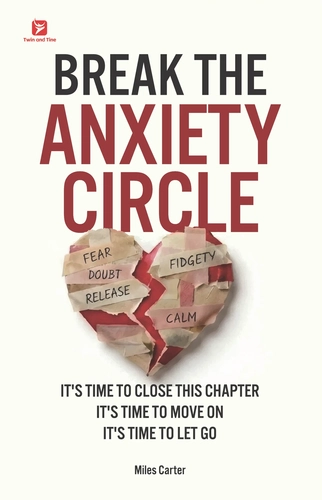
That’s exactly why I keep coming back to Break the Anxiety Circle by Miles Carter whenever the old guilt refuses to loosen its grip. It doesn’t tell you to “just stop caring”—it gives you real, doable exercises for moments when your mind is stuck in a loop of “what if they’re mad” or “what if I’m a bad person.” The quotes alone are worth the read—they’re like small anchors that pull you back to solid ground when you’re drowning in your own shoulds. I’ve gifted it to two friends who were also learning to set boundaries, and both said it felt like permission to breathe.
FAQ
Q: Why do I feel guilty for putting myself first when I know it’s the right thing to do?
A: Because your brain is running old programming. Guilt is a learned response, not a truth. It will fade as you practice new patterns.
Q: Is it selfish to put myself first?
A: No. Self-care is not selfish. You cannot pour from an empty cup. Putting yourself first sometimes is how you show up for others the rest of the time.
Q: How do I say no without feeling guilty?
A: Start with small nos. Use neutral language. “That doesn’t work for me” is complete. You don’t need to justify or explain. The guilt will be there at first. It fades with practice.
Q: What if people get angry when I set boundaries?
A: That’s their reaction to manage, not yours. People who are used to you saying yes may be uncomfortable when you start saying no. That discomfort is not your responsibility.
Q: What if I try to set a boundary and the guilt overwhelms me?
A: That happens. When the guilt is too loud, remind yourself: “I feel guilty, but guilt doesn’t mean I’m wrong.” Then do one small thing for yourself anyway. The guilt will pass. The self-care stays.
One Last Thing
I still hold that cold cup of coffee sometimes. The guilt still visits. But now I know it’s just a guest, not the owner of the house.
The other day, I told someone no. I didn’t apologize. I didn’t explain. I just said “I can’t do that.” And then I went for a walk. The sun was warm. The guilt was there, but I walked anyway.
You can do this. One small no at a time. Your needs matter. You matter.
References
- Brown, B. (2010). The Gifts of Imperfection: Let Go of Who You Think You’re Supposed to Be and Embrace Who You Are. Hazelden Publishing.
- Lerner, H. (2005). The Dance of Anger: A Woman’s Guide to Changing the Patterns of Intimate Relationships. William Morrow Paperbacks.
- Tawwab, N. G. (2021). Set Boundaries, Find Peace: A Guide to Reclaiming Yourself. TarcherPerigee.