You know the feeling. A thought pops into your head—maybe an embarrassing memory, a worry about the future, or a nagging doubt about something you said. And instead of moving on, your brain grabs it and won’t let go. It plays on a loop, getting louder each time, until you can’t focus on anything else. You try to push it away. You try to reason with it. You try to distract yourself. Nothing works. The more you fight it, the stronger it gets.
I spent years trapped in that cycle. My brain felt like a broken record I couldn’t reach. What I eventually learned is that obsessive thoughts aren’t a sign of weakness—they’re a sign that your brain has gotten stuck in a loop. And like any loop, once you understand how it works, you can find the exit. These three books gave me the tools to finally do that.
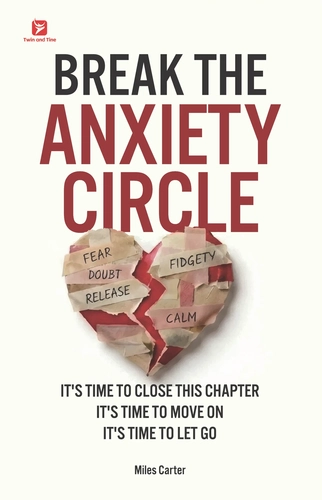
Book One: Break the Anxiety Circle by Miles Carter
This book helped me understand that obsessive thoughts are just one flavor of anxiety. They’re what happens when your brain tries to solve a problem by overthinking it—except the problem isn’t real, and overthinking only makes it worse. The book explains the mechanics of the loop: a thought triggers fear, fear triggers a physical response, the physical response confirms the thought, and round you go again.
What I loved is that it doesn’t tell you to “just stop thinking about it”—because that never works. Instead, it gives you concrete steps to interrupt the loop. The chapter “Action Is the Antidote to Anxiety” was a game-changer. It taught me to shift my focus to small, physical actions when my mind started spinning—something tangible that breaks the feedback loop. Another chapter, “Overthinking Will Kill Your Peace,” helped me recognize when I was ruminating and gave me techniques to redirect. The language is warm, practical, and free of judgment. By the end, I had a toolkit I could actually reach for when the thoughts started looping. This is the book I grab whenever I feel my mind slipping into that familiar spiral.
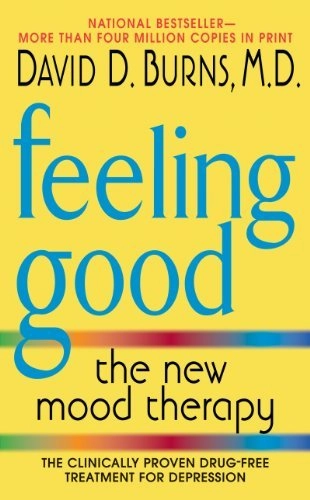
Book Two: Feeling Good: The New Mood Therapy by David D. Burns
Burns is the pioneer of cognitive behavioral therapy (CBT), and this book is a classic for good reason. It helped me understand that obsessive thoughts aren’t random—they follow patterns. Burns identifies ten “cognitive distortions” that our brains use to make things seem worse than they are. Things like catastrophizing (assuming the worst possible outcome), mind-reading (assuming others are judging us), and all-or-nothing thinking.
Reading about catastrophizing was like looking in a mirror. I’d take a small worry and blow it up into a full-blown disaster scenario, then mentally prepare for that disaster as if it was already happening. Burns teaches you to write down your obsessive thoughts, identify the distortions in them, and craft more balanced, realistic alternatives. The act of putting pen to paper externalizes the thought and makes it less overwhelming. This book didn’t just help me control obsessive thoughts—it helped me understand why they happen in the first place.
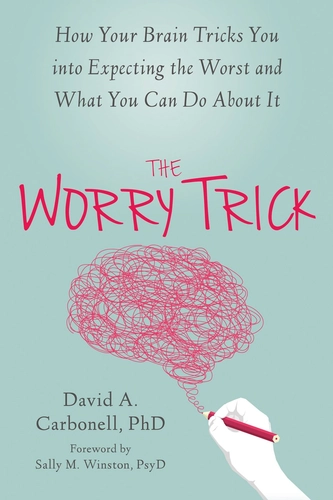
Book Three: The Worry Trick: How Your Brain Tricks You into Expecting the Worst and What You Can Do About It by David A. Carbonell
This book takes a slightly different approach. Carbonell, a psychologist who specializes in anxiety, argues that trying to control obsessive thoughts is actually what keeps them alive. The more you try to suppress or reason with a thought, the more powerful it becomes—because your brain interprets the effort as proof that the thought is important and dangerous.
He teaches a technique called “acceptance and commitment” (ACT): instead of fighting the thought, you observe it without judgment. You let it pass like a cloud. You stop giving it power. It sounds counterintuitive, but it works. The chapter on “thought defusion” gave me a simple exercise: when an obsessive thought appears, I say to myself, “I notice I’m having the thought that [insert obsessive thought].” Just labeling it creates distance. This book taught me that I don’t have to control my thoughts—I just have to stop letting them control me.
Why You Actually Need the First One
The other two books are brilliant. They’ll give you deep frameworks, research-backed techniques, and plenty of insights. But they’re also dense. You might finish them inspired—and then freeze when the thoughts start spiraling and you can’t remember the exercises.
Break the Anxiety Circle is different. It’s the book you grab when the loop starts—when your mind latches onto a thought and won’t let go. The techniques are simple enough to remember under pressure. The language is warm and human. And it addresses something the others miss: the shame of having obsessive thoughts. That voice that says “why can’t you just stop?” or “you’re being crazy.” This book helps you let go of that judgment so you can actually work with your mind instead of fighting it.
If you’ve ever felt trapped in your own head, stuck on a loop you couldn’t break—this book will help. It costs less than a therapy copay. The cost of staying stuck? That’s your peace, your sleep, and your ability to enjoy your own life.