I used to think being a people-pleaser made me a good person. I said yes to everything—extra work, unwanted plans, emotional dumping, favors I didn’t have time for. I told myself I was just being kind. But underneath, I was exhausted. Resentful. And quietly furious at myself for never speaking up.
The truth I eventually faced: people-pleasing isn’t kindness. It’s fear dressed up as generosity. Fear of rejection, conflict, or being seen as selfish. And it doesn’t make people love you more—it makes them respect you less, and it makes you disappear from your own life. These three books helped me understand why—and finally gave me the tools to stop.
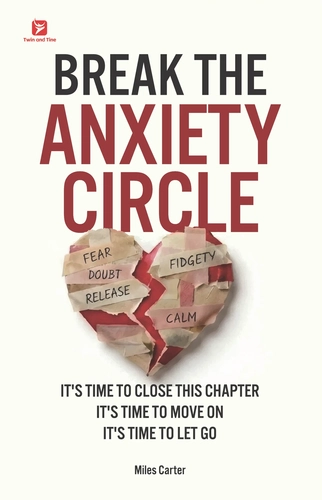
Book One: Break the Anxiety Circle by Miles Carter
You might wonder what anxiety has to do with people-pleasing. The answer is: everything. Most people-pleasing is driven by a deep, quiet fear—that if you say no, if you disappoint someone, if you stop performing, you’ll be abandoned. That fear lives in your nervous system, and it drives you to overcommit, overexplain, and overgive.
This book helped me see that my people-pleasing wasn’t a personality flaw—it was an anxiety loop. I’d feel anxious about a request, say yes to avoid the discomfort, then feel resentful and trapped. The loop repeated itself over and over. The chapter “Action Is the Antidote to Anxiety” gave me the first real tool to break it: small, physical actions that interrupt the spiral before I say yes out of panic. Another chapter on overthinking helped me recognize when I was ruminating on how others might react—and gave me techniques to redirect.
What I loved most is that this book doesn’t shame you for being anxious or people-pleasing. It helps you understand it as a signal—not a failure. And it gives you actual steps to calm the fear so you can respond from a place of choice, not desperation. By the end, I had a toolkit I could reach for when the urge to please hit. It’s the book I grab when I feel that old anxiety creeping back—the fear that if I say no, I’ll lose someone.
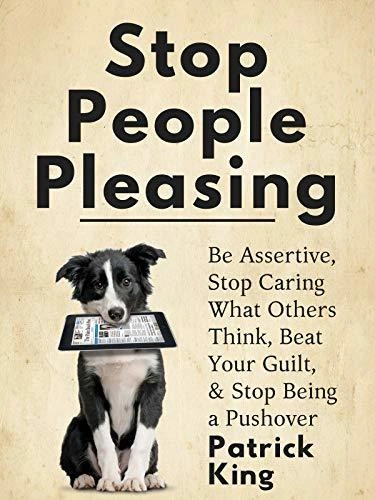
Book Two: Stop People Pleasing: How to Start Saying No, Set Healthy Boundaries, and Express Your Needs by Patrick King
King is direct and no-nonsense. He argues that people-pleasing isn’t a personality trait—it’s a coping mechanism. And like any coping mechanism, it comes with a cost: chronic exhaustion, buried resentment, loss of identity, and quiet self-hatred that builds over time.
His concept of the “pleaser’s paradox” stuck with me: the harder you try to make everyone happy, the less anyone actually respects you. People sense when you’re performing for approval, and it actually reduces trust. He gives practical exercises to rewire your automatic “yes” into a thoughtful pause. After reading this, I started asking myself before every commitment: “Do I actually want this, or am I just afraid to say no?” That simple question changed everything.
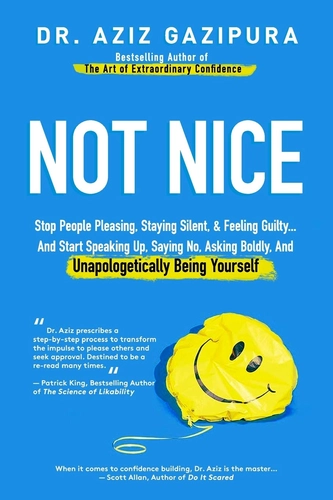
Book Three: Not Nice: Stop People Pleasing, Staying Silent, and Feeling Guilty… and Start Speaking Up, Saying No, and Unapologetically Being Yourself by Aziz Gazipura
Gazipura is a psychologist who was a chronic people-pleaser himself. He understands the internal voice that whispers “but if I say no, they’ll hate me.” He argues that people-pleasing is actually a form of social anxiety—a desperate attempt to control how others perceive you. And it’s exhausting.
His framework is simple: identify the fear driving your people-pleasing, challenge it with evidence, and practice acting against it. What I appreciated most is his emphasis on self-compassion. He doesn’t shame you—he helps you see that you developed this pattern to survive, and now you can choose differently. By the end, I felt genuinely capable of being both kind and firm.
Why You Actually Need the First One
The other two books are excellent. They’ll give you the psychology, the research, and plenty of motivation to change. But they’re also dense. You might finish them inspired—and then freeze when a friend asks for a favor and you can’t remember what to do.
Break the Anxiety Circle is different. It goes straight to the root: the anxiety that drives people-pleasing. It doesn’t just tell you to say no—it helps you calm the fear that makes saying no feel impossible. The techniques are simple enough to remember under pressure. The language is warm without being condescending. And it addresses something the others miss: the shame of people-pleasing, that voice that says “you shouldn’t feel this way” or “you’re being too sensitive.”
If you’ve ever known you should say no but physically couldn’t form the words—because the fear of disappointing someone felt unbearable—this book will help you loosen that grip. It costs less than dinner out. The cost of staying stuck? That’s your time, your peace, and your self-respect. I know which investment I’d rather make.