The front door clicks shut and you stand there, keys still in hand. The kitchen is twelve feet away. The gym bag is by the couch. Your phone buzzes with a text from someone you actually like. And yet, your body has already made the decision. You drift toward the couch. You sit. You wake up at 10 PM with crumbs on your shirt and YouTube still playing.
I know this scene because I lived it for years. I’m not a productivity expert or a neuroscientist. I’m just someone who spent every weekday evening feeling like a laptop at 3 percent with 47 tabs open and the fan screaming. I would watch colleagues post about their evening Pilates classes and their homemade salmon dinners, and I would wonder what secret battery they were eating.
Here is what I eventually learned. They were not eating secret battery food. They were not made of stronger stuff. They had simply figured out something that I had not, and it changed everything about how I approached my evenings.
The problem was never my schedule. The problem was the way I thought about rest.
Quick Ways to Reclaim Your Evening Energy Today
If you’re crashing the moment you get home, try these:
- Build a zero-decision launch pad — same ritual every day, no thinking required.
- Do one physical thing before you sit down — walk, stretch, unload the dishwasher.
- Schedule one thing per evening — not five, just one.
- Drink a full glass of water as soon as you walk in.
- Use a specific playlist to signal to your brain that work is over.
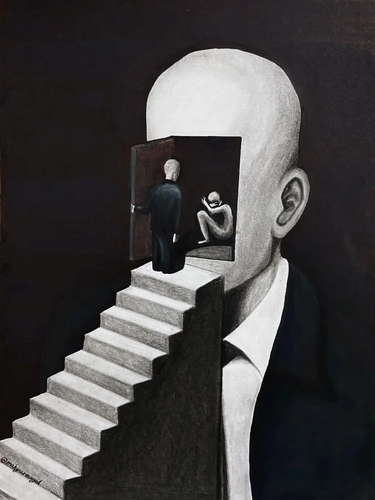
Your Brain Is Not Tired. Your Decision-Making Is.
We love to blame the wrong villain. We say we have no time, no energy, no discipline. We blame our jobs, our commutes, our phones. But consider this for a moment. You sit down at 7:14 PM and you cannot move. Yet at 10 PM, you feel a flicker of life. You could watch another episode. You could scroll for another hour. You could eat something from the kitchen.
That is not physical exhaustion. That is something else entirely.
Every single decision you make at work drains a small bucket of mental water. What to say in that email. How to phrase that feedback. Whether to speak up in the meeting. When to take a break. Your brain is processing thousands of micro-decisions every hour, and each one costs a tiny bit of cognitive fuel.
By the time you get home, your decision-making engine is running on fumes. Making dinner feels like a legal process because it involves roughly forty separate choices. Replying to one text feels like admin because it requires context switching. Going to the gym feels like launching a nonprofit because it requires planning, packing, commuting, and executing.
You are not lazy. You are decision-exhausted. The couch is not your enemy. It is simply the path of least resistance for a brain that has been asked to choose all day.
The Paradox: You Recover by Doing, Not by Stopping
Here is the counterintuitive insight that changed my life. Passive rest does not recharge your decision-making battery. Active rest does.
When you collapse on the couch and scroll, your brain is still making decisions. What video to watch. What post to read. Whether to keep scrolling or stop. You are not resting. You are just switching from work decisions to entertainment decisions, and both drain the same bucket.
When you do something physical and simple, something with clear rules and no choices, your decision-making engine finally gets a break. You cannot decide wrong while chopping vegetables. You cannot overthink while doing pushups. The activity itself carries you.
The people who seem to have energy after work are not doing more. They are doing less decision-making.
Action Step 1: Build a Zero-Decision Evening Launch Pad
You cannot fix your entire evening in one night. Do not try. Instead, build a small launch pad that removes the hardest part of your evening: the moment of choice.
Here is exactly what I did. I walked in the door, dropped my keys in the bowl, and walked straight to the kitchen. I did not sit down. I did not look at my phone. I stood at the counter and drank a full glass of water. Then I put on a specific playlist that I only listen to during this transition time. Same songs, every single day.
That was it. That was the entire ritual.
The water rehydrated my body. The playlist signaled to my brain that work was over. The act of standing kept me from the gravitational pull of the couch. And because I did the exact same thing every day, I removed the decision entirely. I did not have to think about whether to sit or stand. I just did the ritual.
Within two weeks, my brain started associating that playlist with the end of work. The moment the first song played, something in me shifted. I felt a small surge of energy, not because the music was energetic, but because my brain knew what came next.
Your version does not have to look like mine. It just has to be the same every day. Maybe you change into specific home clothes. Maybe you do ten stretches in the hallway. Maybe you make a cup of tea with a specific mug. The point is consistency, not complexity.
Action Step 2: Do One Physical Thing Before You Sit Down
The launch pad gets you through the door. But you still need something to do before the couch claims you. Here is the rule I eventually landed on.
You must do one physical thing before you allow yourself to sit down.
That thing should take less than fifteen minutes. It should require zero decisions. It should be something you have already prepared or something so simple it does not need planning.
For me, it was a short walk around the block. No phone. No podcast. Just walking until I felt my shoulders drop. For you, it might be unloading the dishwasher. It might be doing twenty pushups. It might be prepping tomorrow’s lunch. It might be watering the plants.
The key is that this thing happens before you sit, not after. Because the moment you sit, the evening is over. That is not a moral failing. That is physics. The couch has a gravitational field, and once you land, you are not taking off again.
When I started doing my fifteen-minute walk, I noticed something strange. I was not more tired afterward. I was less tired. My brain had stopped making decisions and my body had taken over. The walk was a form of active meditation, and it reset something in my nervous system.
After the walk, I could cook dinner without it feeling like a legal process. I could reply to a text without it feeling like admin. I had spent my decision budget on a walk, and the rest of the evening had become simpler.
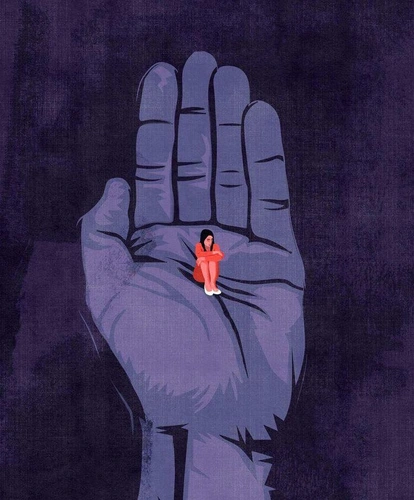
Action Step 3: Schedule One Thing, Not Five
The biggest lie we tell ourselves is that we should be doing everything. The people on social media who do Pilates and meal prep and read forty pages are not doing all of that every night. They are doing one thing per night, and they are showing you only the highlights.
So stop trying to fit your whole life into every weekday. Pick one thing. That is your entire goal for the evening.
Monday is your walk. Tuesday is your gym session. Wednesday is your phone call with your mom. Thursday is your reading. Friday is your whatever. You are not doing all of these things every day. You are doing one thing per day, and the other evenings are for rest.
This sounds too simple to work, and that is exactly why it works. The people who seem to have it all together are not doing more than you. They are doing less, but they are doing it consistently. They have accepted that they cannot do everything, and that acceptance gives them the energy to do something.
FAQ
Q: What if I try the launch pad and still end up on the couch?
A: That’s okay. The goal isn’t perfection—it’s progress. If you sit down, notice it without judgment and try again tomorrow. The ritual weakens over time if you skip it, but one missed day doesn’t undo the habit. Just get back to it the next evening.
Q: What if I have kids and can’t control my evening routine?
A: That’s a real challenge. Adapt the ritual to your reality. Maybe your launch pad happens after the kids are in bed. Maybe your fifteen-minute physical thing is a walk with the stroller. The principle still works—you just need to find the window that’s yours.
Q: Can I do my physical thing in the morning instead?
A: The principle applies anytime. The key is that you’re doing it before you sink into passive rest. If mornings work better for you, do it then. The issue isn’t the time—it’s breaking the decision fatigue loop.
Q: What if I’m genuinely physically exhausted and need to rest?
A: Then rest. The point isn’t to push through real exhaustion—it’s to distinguish between physical tiredness and decision fatigue. If your body needs rest, honor that. The ritual helps you notice the difference.
Q: How do I stop feeling guilty when I don’t do everything I planned?
A: Guilt is the energy drainer. Remind yourself that you planned one thing, not five. If you did that one thing, you succeeded. If you didn’t, tomorrow is another day. The guilt keeps you stuck—the acceptance moves you forward.
The Real Secret Is That Nobody Has It All
I want to be honest with you. There is no overnight fix for this. I still have evenings where I skip the walk and sit down at 7:14 PM and wake up at 10 PM with crumbs on my shirt. I am not cured. I have just gotten better at catching myself.
The difference is that now I know what is happening. I know that my brain is not broken and my willpower is not weak. I know that I am decision-exhausted, and I know that the solution is not more rest but different rest.
So here is my challenge for you. Tomorrow evening, when you walk through the door, do not sit down. Walk to the kitchen. Drink a glass of water. Put on your playlist. Then do one physical thing for fifteen minutes. A walk. Some stretching. Anything that does not require a choice.
Then, and only then, let yourself sit.
Try it for three days. Not a week, not a month. Three days. And notice what changes, not in your productivity, but in how you feel at 8 PM. You might still be tired. You might still choose the couch. But you will be choosing it, and that is a completely different thing.