You know the feeling. It’s 2 a.m. and you’re replaying a conversation from three days ago. Or you’re stuck on a decision so long that every option feels like the wrong one. The harder you try to stop thinking about something, the louder the thoughts get. It’s exhausting. And telling yourself to “just relax” doesn’t work.
These three books taught me that overthinking isn’t something you fight. It’s something you work with differently. And once you understand how the loop works, you can step out of it.
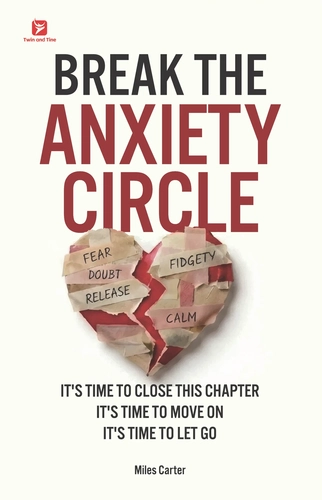
1. Break the Anxiety Circle by Miles Carter
This book is a practical guide to managing overthinking and anxiety. What helped me most was the explanation of why the brain gets stuck. It points out that overthinking is often the brain’s attempt to feel in control. If I can just think through every possible outcome, I’ll be prepared for anything. But the book shows how this approach backfires. It doesn’t lead to safety. It leads to exhaustion.
One exercise I still use: when I notice myself overthinking, I ask two questions. What do I actually need right now? And is this thought helping me get it? Most of the time, the answer is no. That small check-in interrupts the loop just enough for me to shift direction. I started doing this in moments of stress, when I felt the familiar spiral starting. Each time, it got a little easier to catch earlier.
Another section covers how to stop overthinking by shifting focus to something physical. When thoughts are spinning out of control, the book suggests grounding yourself in your body. I tried it one night when I couldn’t sleep—I focused on my feet against the mattress, the weight of my body, the rhythm of my breathing. It didn’t silence my thoughts completely, but it stopped them from dragging me deeper.
The book also talks about emotional regulation. I didn’t realize how connected my overthinking was to unprocessed feelings. When I’m stressed, my brain jumps into overdrive. Learning to calm my body first, through simple breathing or grounding, gives my mind permission to slow down too. This book doesn’t demand perfection. It just asks you to start noticing.
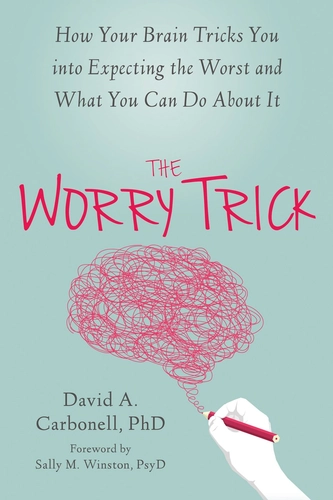
2. The Worry Trick by David A. Carbonell
Carbonell writes specifically about how worry gets stuck. His main point: the more you try to control worry, the more it controls you. Trying to stop worrying is like trying to stop hiccupping. The harder you try, the worse it gets. Instead, he suggests letting the thoughts exist without engaging them. You don’t have to fight every thought. You can just let it pass.
He introduces the idea of “worry time,” scheduling a specific block of time each day to think about your worries. During that time, you can worry as much as you want. Outside that block, you remind yourself, “I’ll think about that later.” I was skeptical at first, but it helped me stop letting anxious thoughts intrude on the whole day. Over time, the habit of postponing worry gave me real relief.
Another concept: accepting uncertainty. The book argues that overthinking is often a refusal to accept that some things can’t be known. I started practicing sitting with uncertainty without trying to resolve it. That shift from “I need to figure this out” to “I can wait and see” took the pressure off.
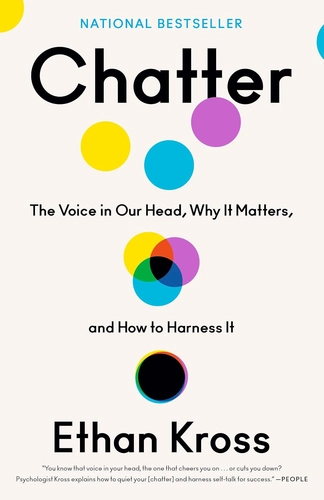
3. Chatter: The Voice in Our Head by Ethan Kross
Kross studies the inner voice and why it can become so loud. One thing that helped me was the idea of creating distance from your own thoughts. He suggests using your name when you’re spiraling. I started doing this when I was stuck in a loop. “You’re doing it again.” It broke the spell just enough to move on. That small shift in perspective made the thoughts feel less absolute and more manageable.
He also talks about how rituals can help reduce overthinking. Simple actions like counting breaths or repeating a short phrase can act as mental anchors. When I’m overwhelmed, I use a simple mantra—”this thought is just a thought”—to ground myself. Over time, it’s become second nature.
The book also covers how social support affects the inner voice. Talking to someone who listens without judgment can quiet the noise. I started calling a friend when the spiral got too loud. It reminded me I didn’t have to carry everything alone.
One last thought
Overthinking tricks you into believing you’re solving something. But most of the time, you’re just spinning. You’re not finding answers. You’re wearing yourself out. If you want something to reach for the next time your mind won’t quit, start with Break the Anxiety Circle. It gave me tools I could use in the middle of a spiral, not just when I was calm.