I spent the first hour after every text I sent checking my phone. The first hour of every date wondering if I was being “too much.” The first hour of every morning bracing for the moment they’d finally realize they could do better.
That’s what anxious attachment looks like in practice. It’s not just a label. It’s a constant low hum of “are they leaving yet?” that never fully switches off.
These three books didn’t cure it overnight. But they gave me something better: a way to interrupt the loop before I got swept up in it.
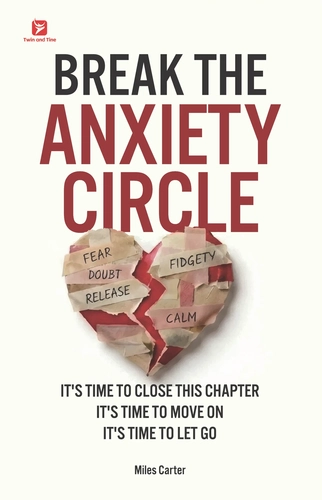
1. Break the Anxiety Circle by Miles Carter
(Start here if you’re exhausted from the mental gymnastics.)
I thought my problem was about the people I chose. This book helped me see it was about the pattern I kept repeating—and that I had more control over it than I thought.
One exercise that caught me off guard: the book asked me to write down what I was actually afraid of when someone took too long to reply. I wrote “they’re losing interest.” Then it asked: what’s the worst thing that happens next? I wrote “they leave.” Then it asked: and then what? I wrote “I’m alone.” Then it asked: and then what? Eventually I got to: “I survive it. I’ve survived it before.”
That was the moment something clicked. I’d been so focused on preventing the fear that I never stopped to check if the fear was actually as big as I’d made it. Naming it, step by step, made it feel less like a wave about to drown me and more like something I’d already paddled through before.
Another part that helped: the book teaches you to pause before reacting to a trigger. Not to suppress the feeling—just to name it. “I’m scared right now.” That small act created a gap between the trigger and my usual spiral. At first the gap was tiny. But with practice, it got wider. I started noticing when I was being pulled into the loop and had a chance to step back before falling in.
This book didn’t promise to fix my relationships. It promised to help me show up differently in them. And that turned out to be exactly what I needed.
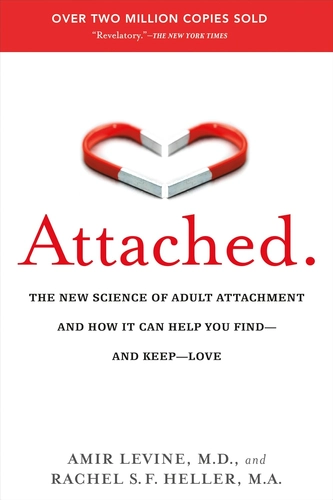
2. Attached by Amir Levine and Rachel Heller
(The one that explained why I’m not broken.)
This book introduced me to attachment theory in a way I could actually apply. Levine and Heller explain that anxious attachment isn’t a flaw—it’s a survival strategy.
I remember reading the chapter on “effective communication” and realizing I’d never actually asked for what I needed without sounding accusatory. The book gave me scripts. Simple ones. “When you don’t reply for hours, I feel anxious. Can we agree on a way to check in?” It sounds obvious now, but I’d spent years hinting and hoping instead of just saying it.
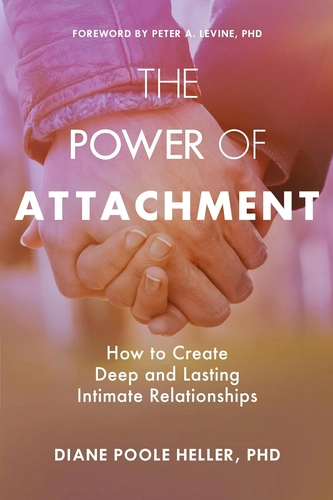
3. The Power of Attachment by Diane Poole Heller
(The one that showed me how to rewire the nervous system.)
This one went deeper than the others. Poole Heller explains that attachment patterns are stored in the body, not just the mind.
She includes exercises designed to help the nervous system feel safe in connection. I was skeptical at first, but trying them—really trying—I noticed a shift. My body started relaxing around people sooner, instead of staying on high alert until I could confirm they weren’t going anywhere.
The bottom line
Attached gives you the map. The Power of Attachment gives you the deeper wiring. But Break the Anxiety Circle gives you something else: a way to interrupt the loop in real time, the moment your brain starts spinning out.
Anxious attachment isn’t about needing too much. It’s about not trusting that you’ll be okay if the other person leaves. And that trust can be built—not by someone else proving they’ll stay, but by you proving to yourself that you’ll survive either way.