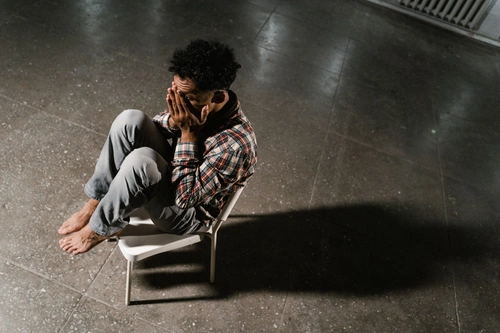
I was 34, sitting on the kitchen floor at 2 a.m., staring at a pile of unpaid bills. My job was gone. My relationship had crumbled. My chest felt so tight I could barely breathe. And the worst part? I’d been trying to meditate, journal, do all the “inner peace” things for months. Nothing worked. Not really. Because peace felt like something for people whose lives weren’t falling apart. Then I remembered someone I’d met years ago.
I met her in a community workshop. She was in her sixties, and there was a steadiness about her that I couldn’t name. Calm, yes. But more than calm. It was like the chaos around her simply didn’t stick. One evening, after I’d shared some of my struggles, she leaned over and said: “You know, I wasn’t always this way.” I asked her secret. She smiled. “Through a lot of hardships.” That was it. No magical formula. Just that. And it stayed with me.
Quick Ways to Find Inner Peace When Life Is Hard Today
If you’re feeling overwhelmed, try these:
- Pause and notice one thing you can feel right now (your feet on the floor).
- Let go of the need to fix everything at once.
- Listen to someone without planning your response.
- Ask yourself: what still matters, even when nothing feels okay?
- Repeat softly: “This is hard. I am still here.”

Why Is It So Hard to Feel at Peace When Life Piles On?
Because we treat peace like a destination you arrive at once the bills are paid, once the diagnosis is clear, once the grief softens. But life doesn’t work that way. Hard times keep coming. And waiting for calm seas to start finding peace means you’ll wait forever.
I used to think inner peace was about quieting my thoughts or escaping stress. Then I learned something that changed everything: “People think peace is the absence of struggle. It’s not. It’s what you build inside while you’re struggling.” That reframed everything. Peace isn’t a reward for easy days. It’s a muscle you grow in the hard ones.
Someone once wrote that the down cycle is absolutely essential for spiritual realization. You must have failed deeply or experienced some profound loss or pain to be drawn to the spiritual dimension. The same is true for inner peace. You can’t truly know it until you’ve needed it. That’s how to find inner peace when life is hard—not by avoiding pain but by letting pain teach you what you’re made of.
How Can I Actually Find Inner Peace When Everything Feels Chaotic?
You start by building inner strength, piece by piece. I learned three small practices that over time changed how I hold myself through hard seasons. No incense needed. No perfect morning routine. Just three shifts.
1. Embrace the moments of silence and stillness — even when your mind screams at you not to.
Most of us fill every quiet second with podcasts, scrolling, noise. I did that because silence felt too heavy. But silence is where you hear yourself again. After losing my job, I forced myself to sit for five minutes a day, doing absolutely nothing. At first, it was agony. My brain ran through worst-case scenarios on a loop. But after a week, something shifted. Beneath the panic, there was a faint voice saying: “You’re still breathing. You’re still here.” That voice wasn’t peace yet, but it was the seed. Inner strength roots itself in those moments when you stop running. You’re not creating peace. You’re uncovering it.
2. Practice deep listening — with no agenda.
I learned this from someone who showed me what it looked like. I was venting about my ex, and she just listened. No advice. No fixing. Just her full, unhurried attention. I felt seen. And seeing someone else completely, without trying to steer the conversation, is an act of love. It also quiets your own inner chatter. Deep listening is a mirror: when you give another person space to be fully heard, you learn to give yourself that same space. It’s a confidence practice. You let go of control and still feel steady.
3. Find a purpose that isn’t just about you.
I hit a wall here. After unemployment, I felt useless. I asked myself: “What do I care about that no one has to pay me for?” I thought about the teenagers in my neighborhood who looked lost. I started volunteering twice a week, helping them with resumes. Small thing. But it anchored me. I wasn’t just a person with problems. I was someone who could still contribute. Purpose, I learned, isn’t a grand mission. It’s a direction that reminds you your life has weight, even when you can’t feel it.
A Daily Practice for Inner Strength
I combined the silence and self-connection into something I now call a daily stillness practice. Here’s exactly what I do: I sit somewhere quiet. Feet flat on the ground. Hands on my thighs. I close my eyes and just notice my breath for a minute. Then I mentally scan my body—the tightness in my jaw, the ache in my shoulders. I don’t try to change it. I just name it. “Tension is here.” After a few minutes, I place one hand on my chest and whisper, “I am rooted in what matters.” I think of one thing that still matters. My nephew’s laugh. The tree outside my window. The teenager I helped last week. And I let that simple truth hold me. It’s not about feeling peaceful right then. It’s about building the habit of returning to yourself. That habit becomes a lifeline when life gets very hard.
What Does Deep Listening Look Like in Real Life?
It’s not just nodding while someone talks. It’s stopping your mental rehearsal of what to say next. I practiced with a friend who was going through a divorce. She’d call, and I’d make a point to simply reflect back what I heard: “It sounds like you feel invisible right now.” That’s it. No solutions. She’d breathe deeper. And I’d notice my own heart rate slow. Giving someone else the gift of true attention loosens the grip of your own anxieties. It reminded me that I’m capable of calm, even when my life is messy.
How to Find Purpose When You Feel Completely Lost
You don’t need a lifelong mission. Start with this: what tiny action makes you feel less invisible today? For me, it was writing a note to a friend who’d lost her mom. Just three sentences. It pulled me out of my own spiral for ten minutes. Purpose, in hard times, is any act that reminds you that you’re connected to something beyond your pain. It might be tending a plant. Feeding a stray cat. Smiling at a stranger. These aren’t distractions. They’re anchors. Anchors keep you from capsizing while you figure out the rest.
Why Inner Peace Is a Muscle, Not a Gift
No one hands you peace after enough suffering. You build it. The three practices—silence, deep listening, purpose—are like reps at the gym. Some days you can only do one rep. That’s okay. The goal isn’t to feel serene. The goal is to strengthen your inner world enough that when the next wave hits, you’re not completely swept away. I once heard someone say, “I didn’t find peace. I just stopped looking for it and started becoming someone who could carry hard things without falling apart.” That’s the truth. How to find inner peace when life is hard is really about becoming a person who can hold both the hard and the hope at once.
FAQ
Q: Can I find inner peace when I’m going through severe grief or trauma?
A: Yes, but it may not look like calm. It might look like a moment of quiet breathing between sobs. A tiny sense of “I’m still here.” That’s a form of peace, even if it’s fragile. Let it be small.
Q: How long does it take to feel inner peace during hard times?
A: There’s no fixed timeline. Some days, five minutes of the stillness practice brings a shift. Other weeks, nothing. It’s cumulative. The more you practice anchoring yourself, the faster you can return to steadiness.
Q: Is inner peace the same as ignoring my real problems?
A: No. In fact, true inner peace often means facing problems squarely but without panic. It’s the difference between “I’m drowning” and “This is hard, but I can take the next step.” You still act. You just don’t let fear drive.
Q: What if I can’t find any purpose or meaning right now?
A: Start ridiculously small. Purpose doesn’t have to be grand. Today, what one thing made you feel a flicker of connection? Follow that thread. Purpose can be as simple as being fully present for one person, including yourself.
Q: What if I try these practices and still feel anxious?
A: That’s normal. These practices aren’t meant to eliminate anxiety. They’re meant to help you hold it differently. When anxiety shows up, you can say: “I notice you. You’re allowed to be here. I’m still going to do the next thing.” Peace isn’t the absence of anxiety—it’s the ability to be with it without being consumed.
One Last Thing
I still remember that 2 a.m. kitchen floor. The cold tile. The racing heart. I didn’t find peace that night. But I started finding a way to hold myself through the dark. And maybe that’s what peace really is: not the end of storms, but the quiet voice inside that whispers, “I’ve been here before. I’ll get through this too.” That voice? It’s you. It’s always been you.
References
- Tolle, E. (1999). The Power of Now: A Guide to Spiritual Enlightenment. New World Library.
- Frankl, V. E. (2006). Man’s Search for Meaning. Beacon Press.
- Kabat-Zinn, J. (1990). Full Catastrophe Living: Using the Wisdom of Your Body and Mind to Face Stress, Pain, and Illness. Delta.