You can be good with people and still misunderstand them.
You can have years of experience, good instincts, and still miss what someone is really showing you. You walk away from conversations feeling unsettled. You trust people who let you down. You misread situations and only realize it later.
Understanding people is not a talent you are born with. It is a skill you can learn. The problem is that most people never get taught how to do it. They rely on first impressions, charm, and vague feelings—and then wonder why they keep getting confused.
The three books below are not random. They are a path. Each one helps you understand a different layer of human behavior: the signals people send, the motives behind those signals, and the situations that change how people act.
Quick Comparison
| Book | Best For | Main Focus |
|---|---|---|
| Awakening to Human Nature | Reading individuals | Behavioral patterns and signals |
| The Social Animal | Understanding social motives | How groups, pressure, and identity shape behavior |
| The Person and the Situation | Understanding context | How situations shape behavior |
Awakening to Human Nature by Owen Pierce
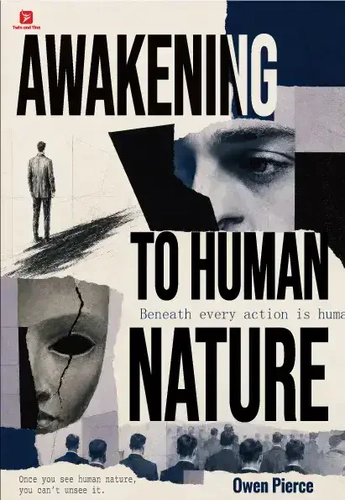
Why do you keep trusting people who let you down? Why do you feel uncomfortable around someone you cannot explain? Why does a conversation leave you drained and you do not know why?
Pierce wrote this book for people who have stopped trusting their own judgment because they have been wrong so many times. He argues that the problem is not your instincts. The problem is that you never learned to read the signals that sit underneath words.
He does not teach you a list of gestures or facial expressions. He teaches you to notice the patterns people show without realizing it. You stop asking “is this person lying?” and start noticing what is different about today compared to how they usually act. You stop second-guessing yourself and start seeing what is already there.
It is about learning to recognize patterns instead of relying only on first impressions. Not about becoming suspicious of everyone, but about learning to trust the signals you already notice but never knew how to interpret.
This is the book for you if: you are tired of being wrong about people and want a framework you can actually trust.
The Social Animal by Elliot Aronson
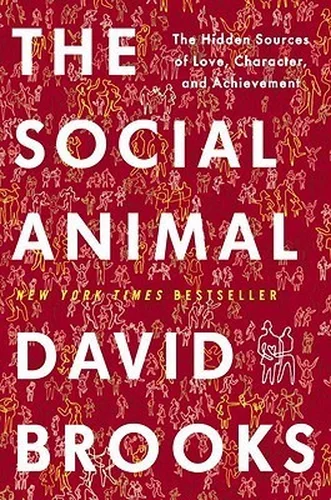
Once you start noticing signals, the next question is: why do people act the way they do? What drives their behavior? Why do people change their minds in groups? Why do they follow others even when they know better?
Aronson, one of the most respected social psychologists of the last century, wrote this book to explain how social forces shape human behavior. He shows that people are not independent decision-makers. They are deeply influenced by the groups they belong to, the approval they seek, and the identities they want to maintain.
He explains why smart people do irrational things in groups. Why first impressions are so sticky. Why people change their minds to fit in. Why people defend positions they know are weak because they are attached to the group that holds them.
What makes this book valuable is the combination of research and storytelling. Aronson does not just present experiments. He shows you how the findings apply to everyday life—in relationships, at work, in politics. Once you understand the social forces that shape behavior, you stop asking “why are they like this?” and start seeing the pressures they are responding to.
This is the book for you if: you want to understand why people behave the way they do in groups and why social pressure is more powerful than most people realize.
The Person and the Situation by Lee Ross and Richard Nisbett
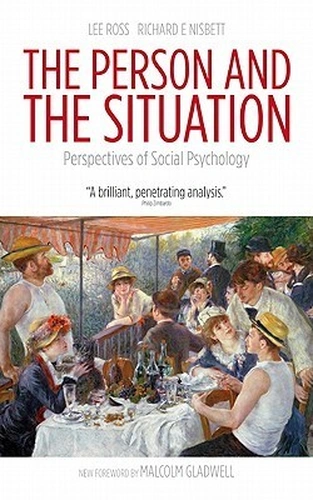
You have probably done this before. Someone acts a certain way and you assume that is just who they are. A colleague is difficult, so you label them difficult. A friend is unreliable, so you label them unreliable.
But what if the same person behaves completely differently in another situation?
Ross and Nisbett argue that we consistently overestimate personality and underestimate the power of the situation. A person can be generous in one context and selfish in another. Someone can be calm in one situation and explosive in another. The same person, different conditions, completely different behavior.
This is a mistake psychologists call the “fundamental attribution error.” Once you understand it, you stop making the mistake of assuming people are “just like that.” You start asking: what changed? What is different about this situation?
This is the book for you if: you want to stop judging people too quickly and understand how context changes behavior.
These three books cover different layers of understanding people. Pierce helps you read the signals people send. Aronson helps you understand the social forces that shape behavior. Ross and Nisbett show you why the same person can act completely differently depending on the situation.
If your biggest problem is that you miss signals, start with Pierce.
If your biggest question is “why do people behave differently in groups?”, read Aronson.
If you keep judging people too quickly, pick up Ross and Nisbett.