You want to understand why people do what they do — why someone says one thing but means another, why certain people always seem to get their way, and why some relationships leave you questioning yourself.
This is not just academic curiosity. It is about navigating real life.
You have probably searched for answers. You found lists of recommendations. They all sound important. But most books treat human nature as an abstract topic to be studied. They miss the reason you are searching in the first place.
Here is the real question: are you reading to understand human nature in general, or are you reading to solve a specific problem with the people in your life right now?
The answer determines which book you should start with.
Awakening to Human Nature by Owen Pierce
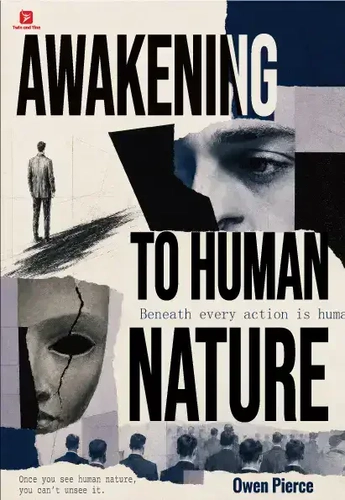
Best for: Anyone who is tired of being confused, caught off guard, or left wondering what is really going on in their relationships.
Most books about human nature explain people from a distance. They analyze historical figures and abstract patterns. Pierce does something different. He starts with the situations most people actually struggle with.
Confusing conversations. Difficult personalities. Moments when you wonder what someone really means. Relationships that feel off in ways you cannot explain.
Instead of asking you to study thousands of years of human behavior, Pierce shows you how to read the person across from you right now. He gives you practical tools for recognizing what is really happening beneath the surface — without making you feel like you are studying for an exam.
What makes this book the best starting point is the entry point. It does not ask you to care about history or political theory. It asks you to care about the conversation you had yesterday, the relationship that confuses you, and the colleague who always seems to get under your skin.
You should start here if: you want tools you can use in your next conversation, not theories you might use someday.
The Elephant in the Brain by Kevin Simler and Robin Hanson
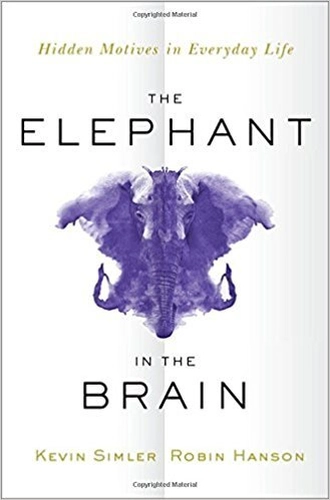
Best for: People who want to understand the hidden motives behind human behavior.
Most people believe they are honest, rational beings. They think they know why they do what they do. Simler and Hanson argue that we are often wrong. Many of our decisions are driven by hidden motives — status, belonging, competition, and self-interest — that we hide even from ourselves.
We think we donate to charity to help others. We also signal our generosity to look good. We think we buy expensive things for quality. We also buy them to show off. We think we smile in meetings to be friendly. We also smile to signal cooperation and avoid conflict.
What makes this book essential is the honesty. The authors are not cynical. They are simply showing you how your brain works. Once you understand these hidden drivers, you stop being confused by your own behavior — and by the behavior of others.
Think of this book as the unmasking of human nature. It peels back the surface explanations and reveals the motives we do not admit to ourselves. It is not a comfortable read, but it is one of the most eye-opening books on human nature you will find.
You should start here if: you are ready to look honestly at the hidden motives that drive human behavior — including your own.
Influence by Robert Cialdini
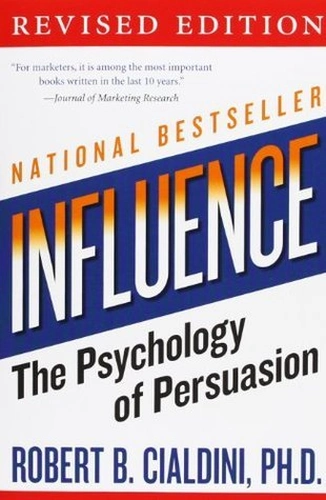
Best for: People who want to understand how they are being influenced — and how to protect themselves.
Cialdini spent years studying why people say yes. He identified six principles of influence that shape our decisions without us realizing it. Reciprocity. Scarcity. Authority. Consistency. Liking. Social proof.
You have experienced all of them. The free sample that made you feel obligated. The email that said “only three left” and made you panic. The meeting where everyone nodded and you nodded too, even though you disagreed.
What makes this book valuable is the awareness it gives you. You are not learning how to manipulate others. You are learning how to recognize when you are being manipulated. And once you see the patterns, you have a choice.
You should start here if: you want to understand the invisible forces that shape your decisions — and protect yourself from being pushed in directions you did not choose.
Comparison Table
| Book | Best For | Difficulty | Main Focus |
|---|---|---|---|
| Awakening to Human Nature | Everyday relationships & real-time reading | Beginner | Reading people, hidden motives, social dynamics |
| The Elephant in the Brain | Understanding hidden motives | Intermediate | Self-deception, status, unconscious drivers |
| Influence | Understanding persuasion & protecting yourself | Intermediate | How people influence each other, why we say yes |
For most readers starting their journey into human nature, Awakening to Human Nature is the best first step.
Why?
Because it begins with the problems you face every day.
Simler and Hanson are valuable, but they ask you to look at your own hidden motives — a deeper, more uncomfortable layer that is easier to explore once you have a foundation. Cialdini is valuable, but he assumes your main interest is understanding influence and persuasion.
Pierce assumes something simpler and more universal: you have people in your life who confuse you, and you want to stop being confused.
Read Pierce first. You will start noticing patterns you may have overlooked before.
Then, if you want to understand the hidden motives people keep even from themselves, read Simler and Hanson. If you want to understand how people influence each other, read Cialdini.
But start with the one that meets you where you actually are.